Walk into any large venue—whether a modern worship center, a corporate auditorium, or a massive live event space—and your eyes are naturally drawn to the front. The stage is where the action is. It’s where the speakers, the worship leaders, or the performers stand.
But at CTS, we believe that one of the true measures of a successful AVL integration isn’t how spectacular it looks and sounds from the front row. It’s how it feels from the very back.
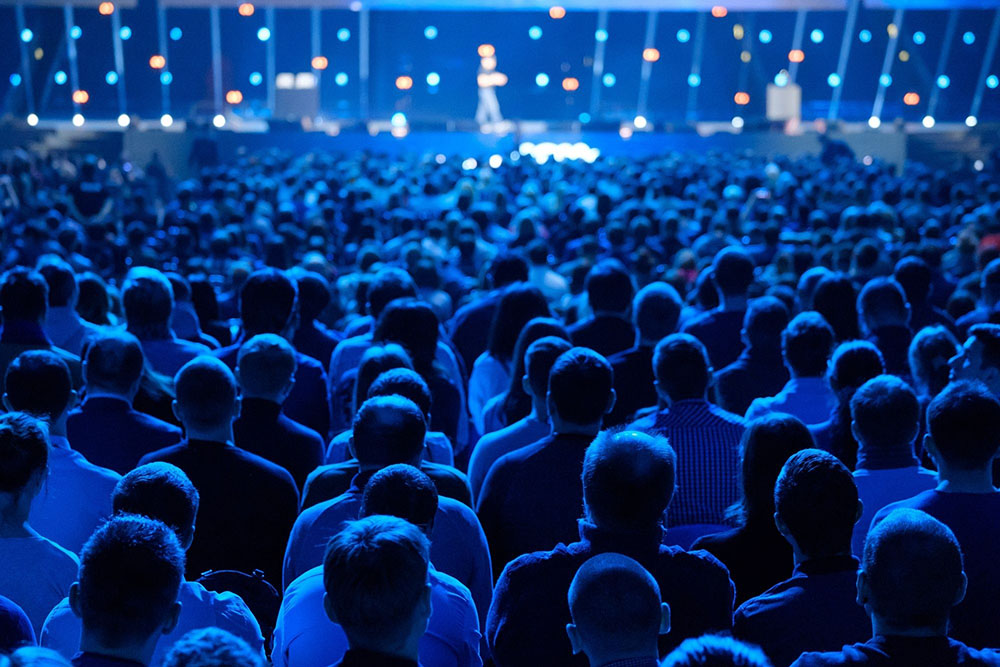
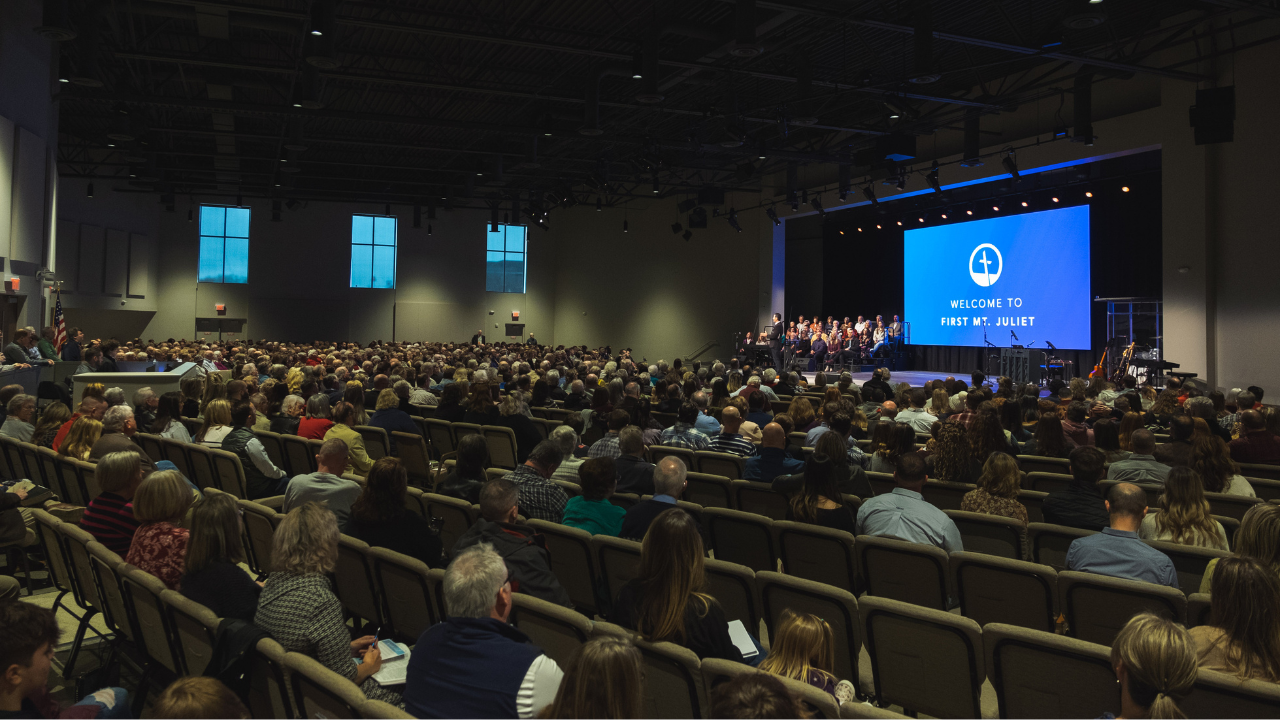
Effective AVL system design means there are no “bad seats” in the house. When we design a space, our mission is to ensure that the person sitting in the very last row—or tuning in from thousands of miles away—feels just as engaged, connected, and moved as the person sitting front and center.
Here is how we design for “the back row” to create equal, impactful experiences across every inch of a space.
1. Intimate Audio: Clarity Over Volume
We’ve all experienced it: you sit near the stage and get absolutely blasted by the sound, or you sit in the back and struggle to understand a single word because the audio is muddy, washed out, and dramatically quieter.
Creating an intimate audio experience in a large room isn’t about turning up the volume; it’s about consistent, non-fatiguing coverage. When audio is balanced and clear across all frequencies, listeners can engage for hours without experiencing ear strain or listening fatigue.
To achieve this, audio engineers at CTS focus on sophisticated speaker coverage patterns and spatial design:
- Line Array & Distributed Speaker Systems: While line arrays are often an excellent solution for projecting sound evenly over long distances with minimal volume drop-off, they aren’t always the right fit for every room or budget. Depending on the venue’s physical architecture, acoustics, and budget, a distributed conventional speaker system—placing strategically positioned speakers throughout the space—can be a far more effective choice for even coverage.
- Fill Speakers & Delays: To fill in the gaps without overpowering the center of the room, we strategically place front fills, under-balcony fills, delay speakers, etc. These are meticulously tuned and delayed (down to the millisecond) so that the sound arriving from the delayed speaker perfectly aligns with the sound coming from the main stage.
- Acoustic Treatment: Even the best speakers can’t fight a highly reflective room or poor-acoustic environment. Proper acoustic treatment ensures that sound waves are absorbed or diffused, preventing destructive reflections or decay times echo from muddling the clarity in the back of the room.
The goal is simple: whether you are whispering or delivering a powerful keynote, the volume and pristine clarity should remain uniform from the front row to the exit doors.
2. Visual Sightlines & Screen Scaling: Legibility at a Distance
If an audience member in the back row has to squint to read the lyrics on a screen or the bullet points on a slide, they will quickly disengage. Designing visual systems for large spaces is a science of sightlines and mathematical scaling.
When determining display sizes—whether utilizing projection or LED walls—we design around the balance between the closest viewing distance and the furthest viewing distance:
- The Math of Scale: We design display sizes based on industry-standard viewing ratios (such as AVIXA’s DISCAS standard). For general viewing, the height of the screen should be at least 1/6th to 1/8th of the distance to the furthest seat. For detailed text or complex data, that screen needs to be even larger.
- LED Pixel Pitch: If we are installing an LED wall, we carefully select the pixel pitch (the distance between individual pixels). While the front row needs a tight pixel pitch to avoid seeing individual dots, the back row relies on the overall brightness, contrast, and physical size of the display to stay engaged.
- Vertical Sightlines: We analyze the room’s physical layout to ensure that heads in the middle rows don’t block the view of those in the back. Elevating displays or configuring tiered seating ensures every seat has a clear, unobstructed line of sight.
3. Camera Angles for Remote Viewers: Extending “The Back Row”
In today’s connected world, “the back row” is no longer confined by the physical walls of your building. Your online audience—viewing via livestream or on-demand video—is an extension of that very same room.
To ensure remote viewers have an equally powerful experience, the physical AVL integration must support clean, professional camera capture:
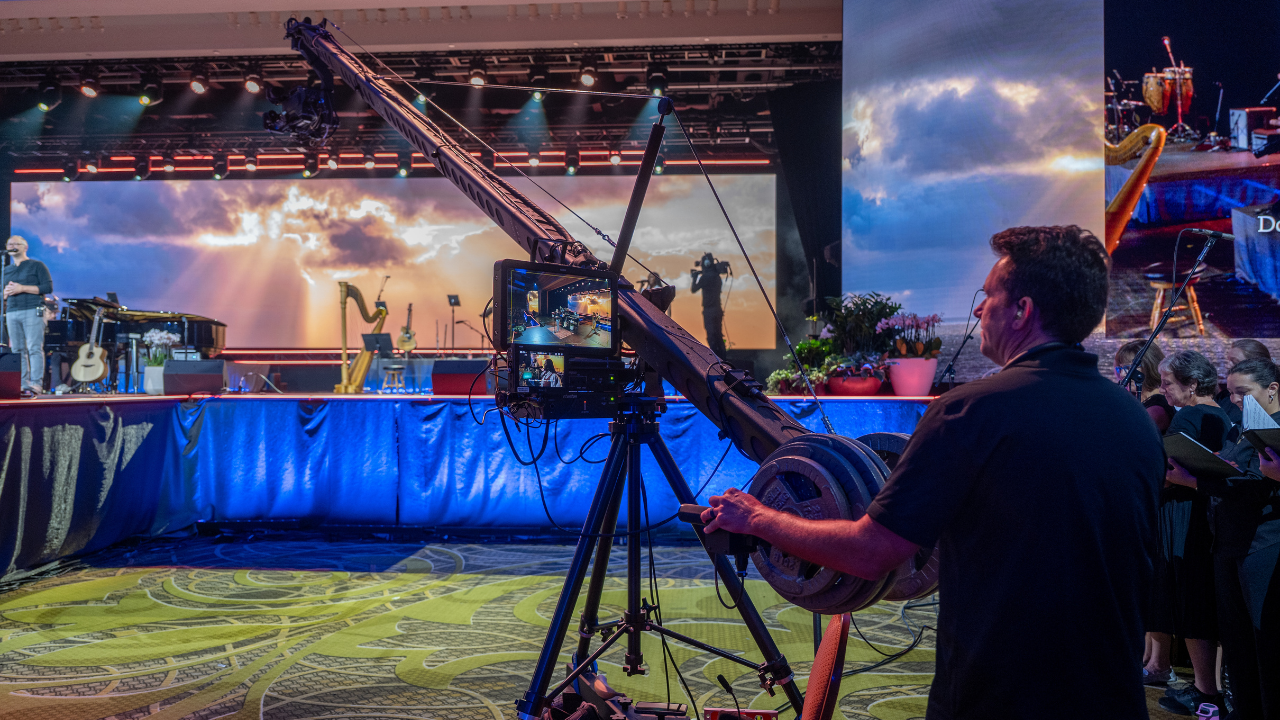
- Camera Placement & Sightlines: Cameras shouldn’t feel like an afterthought. We design dedicated camera positions (including center-camera platforms, robotic PTZ cameras, and jib or roaming camera paths) that capture natural, engaging angles.
- Lighting for Video: What looks good to the human eye in a room doesn’t always look good to a camera sensor. We design lighting packages that provide proper three-point lighting (key, fill, and backlighting) for presenters, ensuring they pop on screen and look crisp for remote viewers without distracting the in-room audience.
- Broadcast Audio Mixes: The acoustic environment of a live room is entirely different from a pair of headphones at home. We often recommend a separate broadcast audio mix, ensuring online viewers get a dedicated mix that includes ambient room microphones so they can feel the energy of the crowd.
Moving the Room, Moving the World
At CTS, we believe that when you move the room, you have the potential to move the world. That belief drives us to look at every project through a lens of equity—ensuring that design decisions are never made solely for the front row.
By prioritizing consistent audio, perfectly scaled visuals, and intentional broadcast systems, we transform large spaces into intimate, unified environments where every attendee is fully present.
Ready to elevate your venue’s experience from the front row to the back? Connect with the CTS team today to explore how our AVL integration expertise can bring your space to life.