When most people picture a stage manager, they imagine someone standing in the wings with a headset, simply pointing an artist or executive toward the stage when it’s their turn to speak.
But at CTS, where we design, engineer, and build live experiences for maximum impact, we know that this is a massive misconception. A stage manager isn’t just a glorified traffic cop for talent. They are a crucial piece of how the vision is translated and designed from Production Management to the team onsite who has to execute at a high level. Not inviting this role into the conversation until the day of the event severely underestimates their importance in helping us avoid the pitfalls of the day.
Typically hired by the client to protect their best interests, a great stage manager works beside production managers and touring managers to oversee day-of activities, keeps the schedule aggressively on track, mitigates overtime costs, and manages local labor and meal breaks. Educating our clients on this essential role is a priority because a strong stage manager doesn’t just make the event better—they empower vendors to deliver the absolute best experience possible.
Here is a look at what a stage manager truly does, and why attempting to run a live event without one is a recipe for chaos.
The Chaos of a Missing Plan
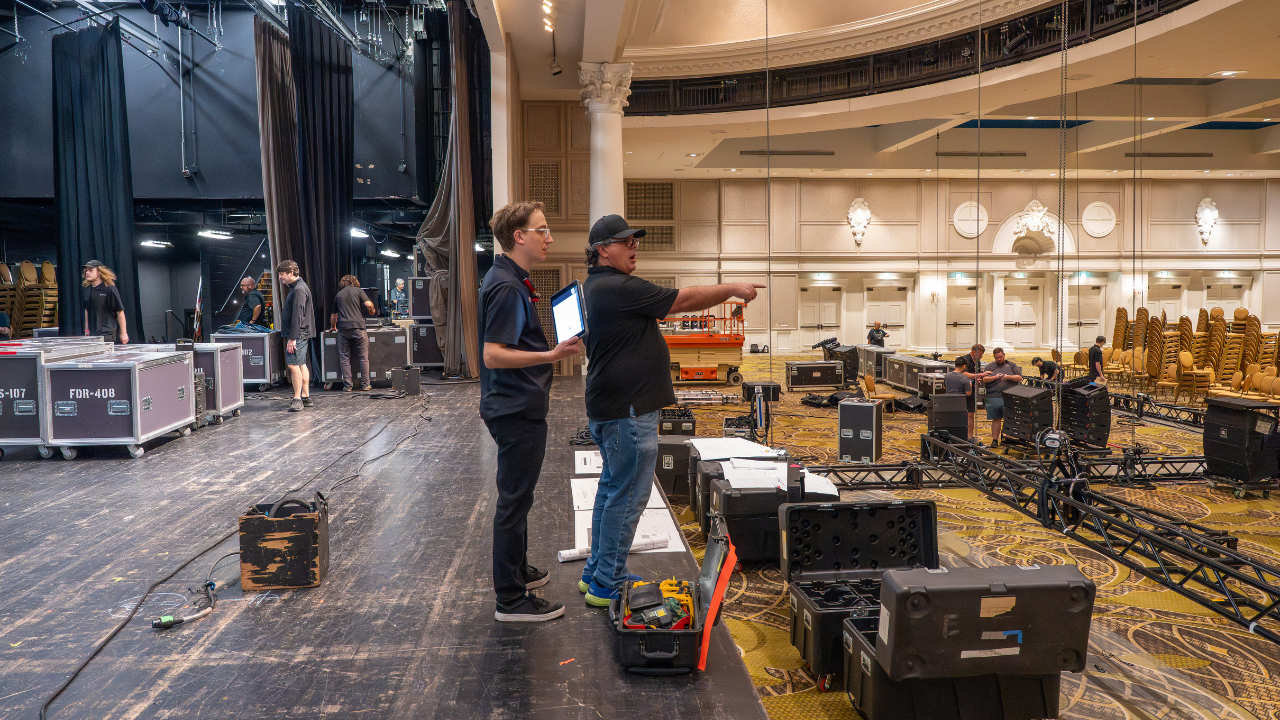
Problems on a show site almost always originate from a lack of planning. Think of building a custom house. A well-run event has a general contractor who ensures the framing is done before the drywall goes up, and the electrical is run before the paint goes on. Without a stage manager managing the schedule, it’s like the plumbers, electricians, and painters all showing up to work in the same bathroom on the same morning. In our world, that looks like trusses getting flown before the cables are loomed, requiring expensive equipment to be brought all the way back down to the deck while crews stand around waiting.
Without a stage manager, there is no “long-plan person.” Budget parameters for labor, crew breaks, and meal penalties are ignored or forgotten, and the financial burden ultimately falls back on the client. As the saying goes in production: 12 stagehands with a good plan will always outperform 24 stagehands with no plan.
Mastering the Order of Operations
A successful load-in boils down to a strict order of operations. A stage manager constantly asks: What needs to happen first to open up space and be ready for the next step? Space is your best friend when loading in for an event.
There are certain fundamental elements that must happen first, such as rigging and power distribution. Trying to push forward with lighting or audio before the rigging is secure will only create bottlenecks and delay all subsequent work. The stage manager enforces this sequence, ensuring that the workspace remains safe, open, and productive.
Managing the Three Ecosystems
One of the most complex responsibilities of a stage manager is acting as the central hub of communication for three distinct groups:
- The Event Vendor Team: The audio, video, lighting, and rigging professionals who are building the technical infrastructure.
- The Local Crew: The local stagehands hired specifically for the event’s AVL setup.
- The “House” Team: The venue staff, including ushers, security, concessions, and seating—everyone who interfaces with the attendees.

A delay in one of these groups causes a massive ripple effect. For example, if the lighting team isn’t given the time and space to finish correctly, the “doors open” call is delayed. That means attendees can’t get to the floor, concessions are delayed, and the schedule bleeds. Without a stage manager, this quickly devolves into a finger-pointing game where teams look out only for themselves, following their own made-up schedules instead of working with a unified team mentality.
The stage manager is responsible for checking in with team members regularly to ensure goals are being met, plans can be altered as needed, and all crew are kept up to date on timelines. In essence, the stage manager is the glue that holds everything together and makes the vision a reality. All vendor and event duties must be completed before the house can get the green light. The stage manager is the bridge that makes that happen. They act as the direct extension of the Production Manager on the floor, wielding the necessary authority and vision to ensure the day’s objectives are completed on time.
The Power of Authority and Delegation
A great stage manager has the definitive authority to start and stop setup processes. By actively directing the workflow, stage managers prevent specialists from being distracted by tasks outside their purview. This means your audio engineers can dedicate their ears and expertise strictly to perfecting the sound system rather than handling logistical chores like moving trucks. In the same vein, the rigging team can focus entirely on safely flying gear to trim instead of being pulled away to build camera configurations. By delegating effectively, the stage manager ensures that every technician can focus their time and energy on what they do best.
The “Pre-Run of Show”
Ultimately, a stage manager takes the client’s creative vision—the Run of Show—and translates it into a strict operational format. Their plan is the “Pre-Run of Show.” Armed with clear communication and proper authority, stage managers can make the split-second decisions that drive the event forward. As our Director of Production Operations always says, “We can’t save you 30 minutes, but we can save you 30 seconds about 60 times a day.”
While often associated with the high-speed world of touring, the core disciplines of meticulous planning, rigorous preparation, and clearly defined roles are universally applicable. Whether you are producing a multi-day worship conference or a high-stakes business summit, the same structural systems that seamlessly move a massive stadium show from city to city are the exact tools that keep corporate keynote sessions from derailing.
At CTS AVL, our goal is to engage, unite, and move people through immersive audio, video, and lighting. But the foundation of that impact relies entirely on a rock-solid operational framework. A stage manager provides this crucial structure, keeping the event on track, organized, and flawlessly executed from the moment the first truck doors open to the final curtain call.